
Anúncios
The dusty trails, the lone gunslinger, the showdown at high noon—Western films remain etched in our collective imagination, embodying timeless stories of honor, survival, and frontier justice.
From the golden age of Hollywood to the gritty Spaghetti Westerns of Italy, the genre has captivated audiences across generations.
Anúncios
These films aren’t just entertainment—they’re cultural artifacts that reflect societal values, anxieties, and dreams of freedom against the backdrop of America’s expansion westward.
Whether you’re a longtime fan or just discovering the genre, Western films offer something uniquely compelling: a mythic landscape where moral codes are tested, heroes are flawed, and the vast, untamed wilderness becomes a character itself.
Anúncios
Let’s saddle up and explore why these classics continue to resonate in modern cinema. 🤠


The Golden Age: When Hollywood Rode Into the Sunset
The 1940s and 1950s marked Western cinema’s most prolific period, with studios churning out hundreds of films that defined the genre’s DNA. These weren’t simple cowboy tales—they were sophisticated explorations of American identity during a time of post-war reflection.
John Ford’s “The Searchers” (1956) stands as perhaps the greatest Western ever made. Starring John Wayne as Ethan Edwards, the film presents a complex, deeply flawed protagonist consumed by revenge and racial prejudice. The sweeping Monument Valley vistas became synonymous with the Western landscape, influencing countless filmmakers from Steven Spielberg to George Lucas.
“High Noon” (1952) revolutionized the genre by unfolding in real-time, creating unbearable tension as Marshal Will Kane awaits killers on the noon train. Gary Cooper’s performance earned him an Oscar, but the film’s deeper commentary on Cold War-era conformity and the courage to stand alone made it a cultural touchstone.
Howard Hawks countered with “Rio Bravo” (1959), deliberately crafting a response to “High Noon’s” themes. Featuring John Wayne, Dean Martin, and a young Ricky Nelson, the film celebrated camaraderie and professionalism over existential isolation, showing the genre’s capacity for philosophical debate through entertainment.
Spaghetti Westerns: Italy’s Revolutionary Take 🇮🇹
When Sergio Leone released “A Fistful of Dollars” in 1964, he shattered every convention Hollywood had established. Shot in Spain with Italian crews and a mostly unknown Clint Eastwood, these “Spaghetti Westerns” injected the genre with operatic violence, moral ambiguity, and Ennio Morricone’s unforgettable scores.
Leone’s “Dollars Trilogy” redefined what a Western could be. The protagonists weren’t noble lawmen but opportunistic antiheroes motivated by survival and greed. The landscapes weren’t Monument Valley’s majesty but harsh, sun-bleached Spanish plains that emphasized isolation and brutality.
“The Good, the Bad and the Ugly” (1966) represents the pinnacle of this movement. Its three-hour runtime builds to one of cinema’s most iconic showdowns, accompanied by Morricone’s legendary score. The film’s commentary on Civil War profiteering and the futility of violence transcended genre limitations.
Leone’s influence extended beyond Westerns. Quentin Tarantino, Robert Rodriguez, and countless others have borrowed his visual language—extreme close-ups, prolonged tension, and sudden explosive violence. His final Western, “Once Upon a Time in the West” (1968), stands as a meditation on the genre itself, mourning the Old West’s passing.
The Man With No Name Phenomenon
Clint Eastwood’s portrayal of the nameless drifter became instantly iconic. Speaking through squinted eyes and cigar smoke rather than lengthy dialogue, this character represented a radical departure from the talkative, morally clear heroes of classic Hollywood Westerns.
This laconic approach influenced action cinema globally, from Bruce Willis in “Die Hard” to Ryan Gosling in “Drive.” The strong, silent protagonist became a template that continues resonating with audiences seeking authenticity over exposition.
Revisionist Westerns: Deconstructing the Myth
By the 1970s, filmmakers began questioning the Western’s foundational myths. Sam Peckinpah’s “The Wild Bunch” (1969) depicted aging outlaws confronting obsolescence in a modernizing world. Its graphic violence shocked audiences but reflected Vietnam-era disillusionment with American exceptionalism.
“Little Big Man” (1970) told frontier history from Native American perspectives, challenging the genocide that westward expansion entailed. Dustin Hoffman’s character witnesses Custer’s Last Stand, presented not as heroic sacrifice but as arrogant incompetence meeting justified resistance.
Clint Eastwood’s “Unforgiven” (1992) deconstructed his own Man With No Name persona. As aging gunfighter William Munny, Eastwood portrayed violence not as glamorous but as traumatic and corrupting. The film won Best Picture, proving Westerns could still achieve critical acclaim by interrogating their own mythology.
Cultural Impact: Why Westerns Matter Beyond Entertainment
Western films served as America’s national mythology during the 20th century. They provided simple moral frameworks during complex times—clear heroes and villains, honor codes, and the promise that individual courage could overcome any obstacle.
The genre shaped how generations understood concepts like masculinity, justice, and community. The lone sheriff standing against corruption became a template for heroism across all media. From Superman to space operas like “Star Wars,” Western archetypes permeate popular culture.
Westerns also reflected societal anxieties. Cold War-era films often featured communities threatened by outside forces, mirroring Red Scare paranoia. The 1970s revisionist Westerns questioned authority and romanticized narratives, aligning with Watergate-era cynicism.
Gender Dynamics and Evolving Perspectives
Classic Westerns often relegated women to supporting roles—schoolteachers, saloon singers, or homesteaders needing protection. Yet some films challenged these limitations. Joan Crawford starred in “Johnny Guitar” (1954), a psychosexual Western where women drove the narrative and men were secondary.
Modern Westerns like “True Grit” (2010) and the miniseries “Godless” (2017) center capable women navigating frontier violence. These revisions acknowledge that Western expansion involved diverse peoples whose stories were marginalized in classical films.
Fascinating Behind-the-Scenes Stories 🎬
The creation of Western classics involved drama rivaling their on-screen action. During “The Magnificent Seven” (1960), the cast’s competitive egos created constant tension. Steve McQueen notoriously distracted audiences during Yul Brynner’s scenes by shaking shotgun shells or adjusting his hat, infuriating his co-star.
John Wayne and director Howard Hawks allegedly made “Rio Bravo” as a direct rebuttal to “High Noon,” which Wayne considered un-American. This artistic disagreement resulted in two masterpieces exploring opposite philosophies about heroism and community.
Sergio Leone didn’t speak English during “A Fistful of Dollars,” communicating with Clint Eastwood through an interpreter and gestures. This language barrier ironically contributed to the film’s minimalist dialogue, as complex conversations were simply impractical to coordinate.
Monument Valley’s iconic status came at a cost. The location’s remote nature meant cast and crew endured harsh conditions—extreme temperatures, minimal facilities, and dangerous stunts performed without modern safety standards. Several actors sustained serious injuries during Ford’s films there.
Musical Scores That Define the Genre 🎵
Ennio Morricone’s scores for Leone’s films revolutionized Western soundtracks. Rather than traditional orchestral arrangements, Morricone incorporated gunshots, whip cracks, electric guitars, and whistling. “The Ecstasy of Gold” from “The Good, the Bad and the Ugly” remains one of cinema’s most recognizable compositions.
Elmer Bernstein’s theme for “The Magnificent Seven” became synonymous with heroism itself, borrowed extensively in commercials, sports broadcasts, and tributes. Its rousing energy perfectly captures the film’s spirit of camaraderie and noble sacrifice.
Dimitri Tiomkin’s work on “High Noon” introduced the “Do Not Forsake Me, Oh My Darlin'” ballad, which commented on the action throughout the film. This technique influenced countless filmmakers and became a Western staple.
The Modern Western: Evolution Rather Than Extinction
Reports of the Western’s death are greatly exaggerated. Contemporary filmmakers continue exploring frontier themes through fresh perspectives. The Coen Brothers’ “True Grit” proved audiences craved well-crafted Westerns, earning over $250 million worldwide.
“Django Unchained” (2012) merged Spaghetti Western aesthetics with slavery narratives, creating controversy and conversation. Tarantino’s genre-blending approach introduced Western conventions to audiences who might never watch classical examples.
“The Revenant” (2015) embraced brutal naturalism, eschewing gunfighter romanticism for survival horror in frozen wilderness. Leonardo DiCaprio’s Oscar-winning performance showed Westerns could still attract prestige talent and awards recognition.
Television has embraced the genre with sophisticated serialized storytelling. “Deadwood” presented frontier life’s complexity through Shakespearean dialogue and moral ambiguity. “Westworld” literalized Western mythology by making it an artificial theme park, questioning our obsession with frontier narratives.
Why Westerns Endure in the 21st Century
Modern audiences gravitate toward Westerns for their fundamental storytelling clarity. In an era of superhero franchises and CGI spectacles, Westerns offer human-scale dramas where characters face consequences and physical danger feels genuine.
The genre’s exploration of honor codes resonates across cultures. Japanese samurai films and Westerns share thematic DNA—Kurosawa’s “Seven Samurai” became “The Magnificent Seven,” while Leone’s “A Fistful of Dollars” adapted “Yojimbo.” This universality explains Westerns’ global appeal.
Westerns provide mythic spaces to examine contemporary issues. Border conflicts, environmental exploitation, justice versus law—these themes remain urgently relevant. The frontier becomes a canvas for exploring what happens when civilization’s rules break down.
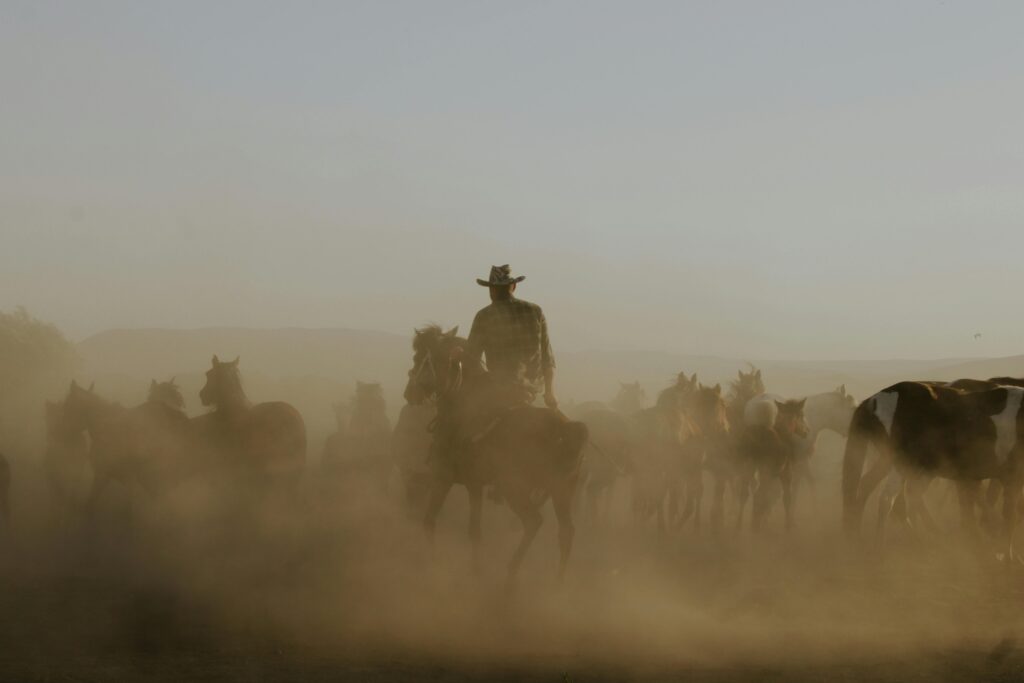
Visually, few genres match the Western’s iconography. Sunsets, deserts, horses, and wide-open spaces create instantly recognizable imagery that transcends language barriers. These elements maintain aesthetic power regardless of technological changes in filmmaking.
Streaming Era Accessibility
Digital platforms have introduced Westerns to new generations. Classic films once difficult to find now stream globally, allowing audiences to discover Ford, Leone, and Peckinpah without hunting for DVDs or waiting for cable broadcasts.
This accessibility has created renewed appreciation for the genre’s craftsmanship. Younger viewers raised on rapid editing discover Leone’s patient compositions build tension more effectively than modern action sequences. The deliberate pacing that once seemed dated now feels refreshingly confident.
Essential Viewing: Westerns That Define the Genre
For newcomers wondering where to start, certain films provide perfect entry points while showcasing the genre’s range:
- “The Searchers” (1956) – The definitive classical Western, complex and visually stunning
- “The Good, the Bad and the Ugly” (1966) – Spaghetti Western perfection with iconic music and cinematography
- “Unforgiven” (1992) – Modern deconstruction that honors while challenging genre conventions
- “Butch Cassidy and the Sundance Kid” (1969) – Charismatic performances and witty dialogue updating Western archetypes
- “True Grit” (2010) – Accessible contemporary take balancing violence with dark humor
Each film represents different eras and approaches, collectively demonstrating why Westerns remain cinematically vital.
The Timeless Appeal of Wide-Open Spaces
Perhaps Westerns endure because they tap into something fundamentally human—the desire for freedom, the need for justice, and the appeal of starting fresh in unexplored territory. The frontier may have officially closed in 1890, but the psychological frontier remains eternally compelling.
These films present worlds where individual action matters, where choices have clear consequences, and where landscape and character interact symbolically. In increasingly complex modern life, this clarity provides cathartic simplicity without insulting audiences’ intelligence.
The Western continues evolving, incorporating diverse voices and contemporary sensibilities while maintaining core thematic elements. As long as audiences crave stories about honor, survival, and the conflict between wilderness and civilization, the genre will find new expressions and devoted fans.
So grab your hat, settle into the saddle, and explore the rich territory Western cinema offers. Whether you prefer Ford’s poetry, Leone’s operatics, or modern revisionist takes, there’s a trail worth riding. The West—both real and mythic—continues calling to anyone seeking adventure, meaning, and unforgettable stories told against endless horizons. 🌅
